Feature
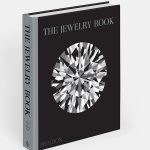
About the writer: Grant is a writer and curator specialising in the art and economics of jewellery. Her latest project ‘The Jewellery Book’ was published by Phaidon this month.
Julius Caesar was a ruthlessly ambitious man who enjoyed beauty as much as he loved power. He was married three times but had a panoply of mistresses. It was to Servilia, his favourite, that he gave a black pearl that was worth six million sesterces (about €1.3bn today). She wore it as an earring and it is arguably the most expensive pearl in history. Caesar was obsessed with pearls. By the 1st century bc he had passed a law that banned unmarried women from wearing them. Engagements soared. Pearls separated Roman nobility from the hoi polloi but their cost could lead to bankruptcy for all but the wealthiest. Our obsession with them continues millennia later.
Some of the oldest pearls date back 7,000 years to a Neolithic archaeological site in Kuwait. Pearl fishing reshaped the lives and fortunes of those in the Persian Gulf, with Pliny the Elder writing about his admiration for Tylos (now Bahrain) and the greatness of Arabian pearls. He disapproved of men wearing them and believed that they were created when oysters swam to the surface to swallow dew.
The golden age of pearls might have happened centuries ago but a revival has taken place in more modern times. “Jacques Cartier came to Bahrain in 1912 to buy natural pearls from diving families,” says Noora Jamsheer, the ceo of the Bahrain Institute of Pearls and Gemstones (Danat). “That was when they became integrated into international jewellery lines.”
Just before that in 1893, Kokichi Mikimoto, the son of a noodle-shop owner in Japan, invented the cultured pearl by inserting shards of mother of pearl into oysters. Between 1916 and 1935, Japanese farms were producing 10 million pearls per year. Suddenly, everyone could wear them and while imitation pearls made of glass had existed even in ancient Rome, they had never attained this level of sophistication and the industry polarised.
By the 1950s, after two world wars, the Great Depression and the discovery of oil, pearl fishing in the Gulf greatly declined. Natural pearls now account for less than 5 per cent of the market but Bahrain is fighting back. “One of the pillars of the national 2030 plan is the protection of pearl beds and regulating divers,” says Jamsheer. Oyster beds act as carbon sinks and, as water filters, they suck up pollutants – assuming that they aren’t overfished and only plucked when mature by licensed divers employing ethical practices.
Their rarity inspires devotion in some. Melanie Georgacopoulos uses natural white Hippopus clam pearls from Indonesia in her design, finding them luxurious yet understated with a good price point between cultured and conch. “I gravitate towards pearls” she says. “They don’t scream, they whisper and I like that a lot.”
Conch pearls found exclusively in the Caribbean come at a hefty price and in a variety of shimmering pink hues. Jeremy Morris, the ceo of David Morris, has been captivated by their beauty for more than 20 years and in Vertigo, he sets a 17.19-carat conch pearl in a swirling sea of Paraíba tourmaline with diamonds in a signature pirouette motif.
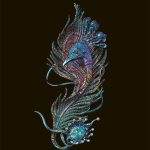
In his extravagant Feather brooch, which now sits in the permanent collection at London’s v&a Museum, BHAGAT combines the Indian style of layering swags of natural pearls – which gained prominence in the 18th and 19th centuries with the maharajas with Art Deco. Comprised of 424 natural saltwater Basra pearls from the Gulf with an ethereal glow and lustre, set into the finest whisper of platinum, it is edged in diamonds and took about five months to make, once the pearls had been sourced.
The natural pearl, an organic gemstone formed inside a mollusc without any human intervention, still has the power to seduce. “Over my 30-year career, I have seen quite a clear-cut distinction between the global jewellery retail houses that mostly lean towards cultured pearls and the niche family jewellers focused on haute joaillerie,” says Paul Redmayne, the senior vice-president of luxury sales at Sotheby’s.
“Auction houses sell almost exclusively natural pearls, which are the pinnacle of the pearl world, and I would say are best understood and appreciated in the Middle East, as well as in Asia.” To illustrate that point, Marie Antoinette’s pearl pendant – believed to be one of the jewels smuggled out of the Palace of Tuileries as revolutionaries gathered outside – was sold at Sotheby’s Geneva in 2018 for $41m (€35m).
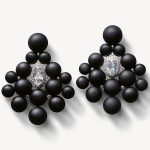
In contemporary design natural pearls combined with emeralds beckon at Taffin in New York, clusters of silky grey pearls cling to the ear at Hemmerle in Munich and at Tiffany a natural saltwater Gulf pearl has replaced their iconic ‘Bird on a Rock’. Western jewellers may use them but desire to own is mounting in the East. “India has an ever-growing appetite for pearls, as does China,” says Charlie Barron, a jewellery and gemstone dealer based in London, and he’s right. “Natural pearls are expensive but actually the most affordable they have been in history – but I would buy them from a trusted source,” he advises.
Caesar didn’t exactly buy the black Servilia from a trusted source. He took it as a trophy during his invasion of Britain in 55bce, in a war instigated by his lust for Scottish natural freshwater pearls –as seen at Edinburgh’s Hamilton & Inches today. He believed that pearls were tears of joy from Venus, the goddess of love and beauty, whom he regarded as an ancestor.
Yet Persian poet Saadi Shirazi perhaps described it best in his 13th-century work Bustan, in which an oyster opens its shell to receive a drop of divine rain, which in time becomes a pearl. This was a spiritual lesson to stay humble and patient while life’s challenges become something valuable – and what better illustration of that than a natural pearl?
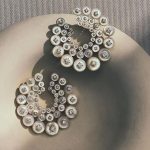
Image Chaumet
Written by Melanie Grant for Konfekt in November 2025.