Feature
Charlie Barron was 9 years old when he and his family went to Australia for Christmas. But when he didn’t meet the height requirement to climb the Sydney Harbour Bridge — ironic, as he now is 6 foot, 5 inches tall — he went to visit some family friends at Paspaley Pearls in Sydney.
In the basement of the building was a huge vault and, Mr. Barron recalled recently, as its thick metal door swung open, trays and trays of South Sea cultured pearls glowed in the dim light. In that moment, he said, he had found his purpose in life: making and dealing in jewelry.
“I always felt as a child I was in the wrong place,” Mr. Barron, 30, said about growing up as the youngest of four on his family’s potato farm in Newmarket, England. “I was hyper-dyslexic, a total terror at school and a difficult kid, but whenever I thought of jewelry, I was home for the first time.”
Leaving school at 18, he worked as a farm laborer and did odd jobs to pay for a trip to Kobe, Japan, an important global center for pearl trading, where he did a brief internship. Over the next few years he studied gemology, learned diamond cutting and polishing in Amsterdam and then went to Bangkok, where he lived and worked in a jewelry factory, subsisting on what he described as a bottomless supply of steamed rice.
When he moved to London in 2017, he borrowed money to design and create 53 pieces of jewelry, and then began trying to sell them to jewelers as a “white label” collection, the industry term for designs that the buyers could sell as their own. Eventually William Asprey, a member of the prestigious jewelry and leather goods family and the owner of the William & Son luxury brand at the time, bought the lot. Mr. Barron was in business.
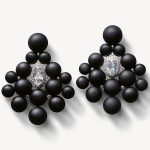
And while he still designs the By Barron collection, with pieces such as elaborate chandelier diamond earrings, he spends most of his time now buying and selling jewelry and objets d’art.
He was first exposed to that world while he was growing up in Newmarket, the home of British horseracing and a magnet for the British peerage and Middle Eastern royalty. “It was the perfect breeding ground” for his business, Mr. Barron said.
By the time he was living and working in London, some of those contacts had become clients. And in 2021, he spent time focusing on the United States, building relationships in the playgrounds of the rich, such as Palm Beach, Fla.; Aspen, Colo., and New York City.
Mr. Barron said his age has presented a challenge at times. “Most people don’t want to sell their family tiara to a 26- or 27-year-old,” he said, “but if you’re paying more than everyone else, people listen to the sense of the money and they can feel if you’re competent.”
Also, he added: “My hair is thinning a bit so that helps me look older.” Of course, he is not the only younger person rising in the jewelry world today. Max Fawcett, at just 34, was recently appointed the new global head of jewelry at Christie’s in Geneva. “While buyers are primarily in the Far East, the United States and the Middle East, Europe remains the unrivaled seller’s market and we need ambitious dealers to move it forward,” he said. “Barron is a deal maker, and he loves it.”
The plush yet discreet office of Barron London in the Mayfair area is an Aladdin’s cave of curiosities, including artifacts in his personal collection such as a Gandharan schist column featuring Buddha seated on his throne in paradise and a selection of Egyptian statues with delicate hieroglyphs.
Mr. Barron appears to love antique, vintage and contemporary design equally, but there is a certain twinkle in his eye when he speaks about the history of jewelry. “He cares about the heritage of the piece,” said Joanna Hardy, a fine jewelry specialist in Britain, “and it’s lovely to meet someone who I feel the antique trade going forward, will be in good hands.”
At the ancient end of his stock is a pair of saucerlike yellow gold medallions from the Ziwiye hoard of 1st millennium B.C. Iran that the London jeweler Glenn Spiro crafted in 2020 into diamond-accented earrings.
There is also a 1939 chunky gold bracelet with Ceylon sapphires from Cartier and two rings created 60 years apart: a 1950s Suzanne Belperron design featuring a 35-carat Ceylon yellow sapphire and a honeycomb shank filled with citrines and sapphires and a 2008 piece by James de Givenchy at Taffin that showcases a 22-carat cushion-cut Ceylon yellow sapphire with cabochon rubies and brilliant-cut diamonds.
“I can tell you every weight, every piece of every stone in my safe today and everything I’ve ever sold,” Mr. Barron said. “You always know where you are with a gemstone.” Potatoes (unless they were carved by Fabergé in pink agate) now seem worlds away.
Written by Melanie Grant for The New York Times in December 2025.